
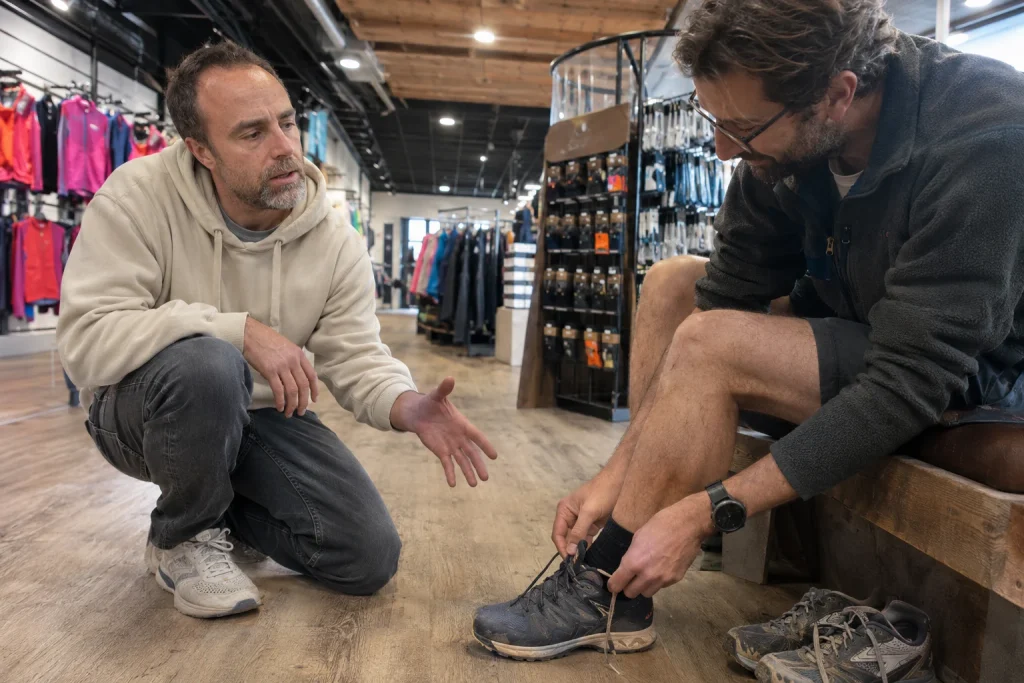
You tighten the laces and your heel still moves. Before dropping a size, locate the extra room. The length might be right while the shoe feels too loose around the instep.
- 1. Length
Check toe room while standing.
- 2. Width
Notice whether the forefoot shifts from side to side.
- 3. Volume
Check if you have to pull the laces too tight to hold the midfoot.
Check three dimensions
Stand in your usual running socks. Compare both feet for length and forefoot width, then look at how the shoe fits over the top of the foot. Sizing down can pinch the toes when a different shape would hold the midfoot better.
Before choosing a smaller size
Your heel slips, but your toes have the right amount of room. One size down holds the heel and makes your toes touch the front. Return to the length that gave you room and try a different shape around the heel or midfoot. Walk and turn before deciding.
If only the old pair feels loose, look at the lining and compare it with a less worn shoe of a similar size. Keep the same socks and try both feet. Weight change is one possible part of the story. Wear and shoe shape can also explain why one pair fits differently.
Compare the old pair and the new one
Try your regular shoes and a less worn pair with the same socks. Look at the heel lining and try a comfortable lacing adjustment. Walk and turn, checking that the heel stays put while the toes have room. Ask a healthcare professional about sudden changes, pain or unusual swelling.
Less room around the foot can feel better at the same length
A loose heel and laces that need more tightening can point to volume or heel shape, especially when your longest toe still reaches the same spot. Sideways movement in a turn gives you a reason to look at width. Socks, time of day and compressed linings can change how a shoe fits. Weight loss can coincide with a change in fit, but there is no reliable way to turn pounds lost into shoe sizes.
A smaller size can fix one issue and create another
Imagine your heel lifts in your old pair. Half a size down feels secure in the shop, then your second toe hits the end on a descent. A different model at the original size, with a closer heel fit, may hold you without taking away toe room. If only one old shoe feels loose, compare the two linings and try a less worn pair with the same socks.
Check both feet standing. Walk and turn gently, with enough space for your longer foot and no lace pressure over the top. Bring your old pair if you want to show where the movement happens. Seek medical advice for new swelling that persists, particularly if it affects one foot or comes with pain.
- Toes touch the end → check length
- Foot slides sideways → check width
- Heel lifts → compare shape and volume