
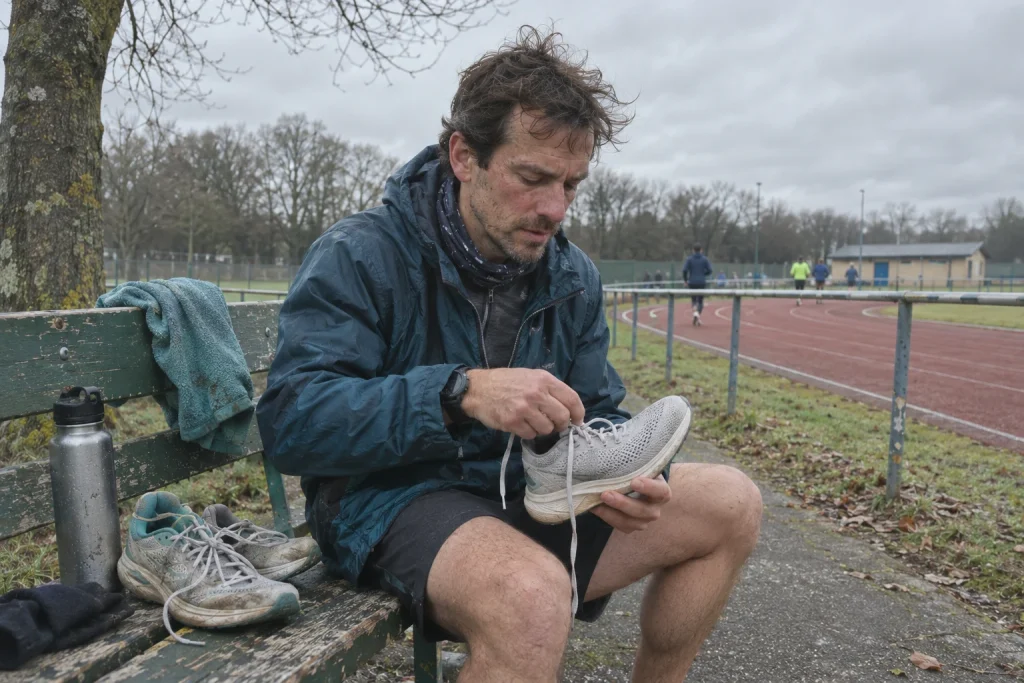
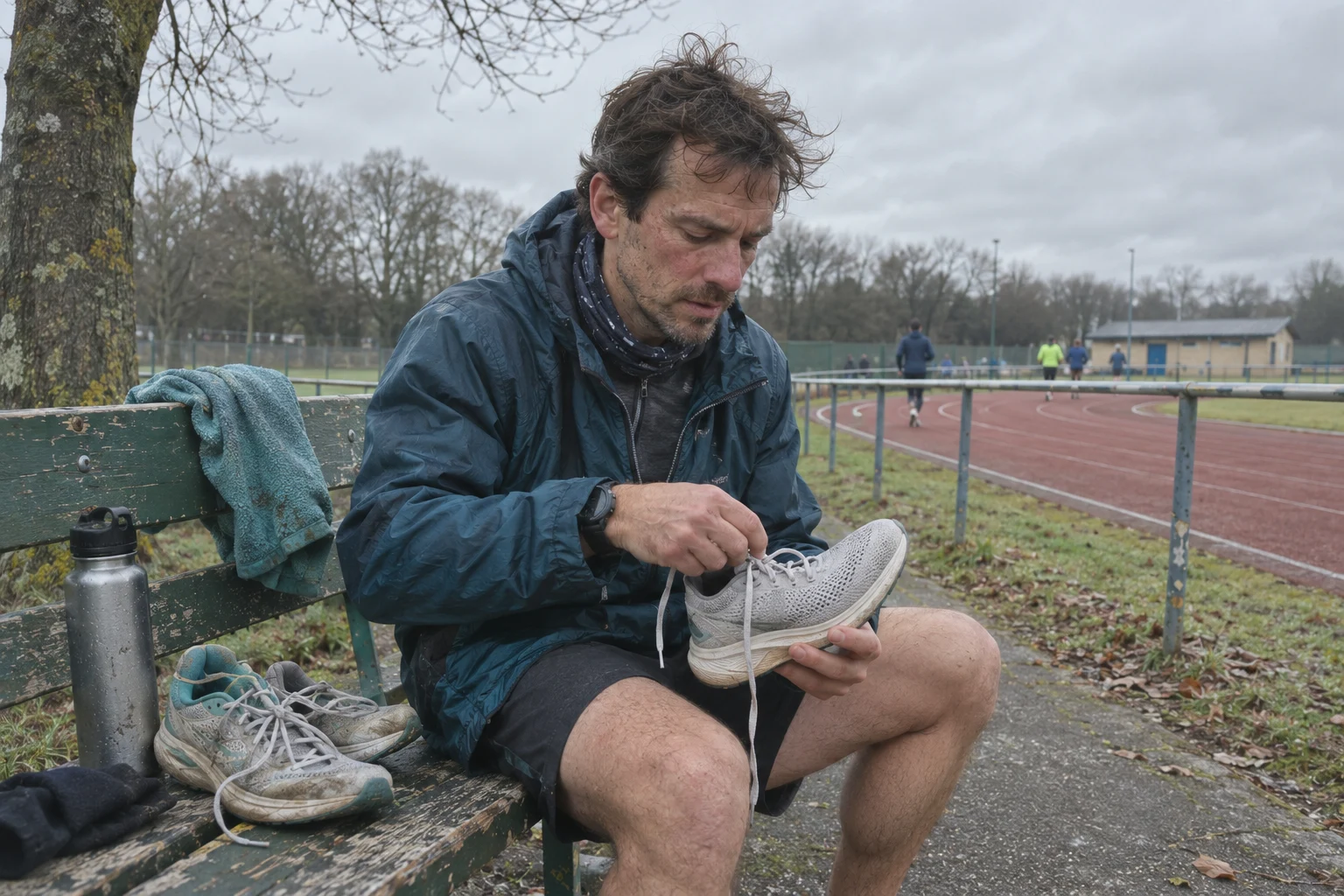
You are getting ready for a race and wondering about carbon. Start with your goal, pace and the feel you want. A racing shoe can change how the foot loads from the first few steps.
- 1. Goal
Note the distance, surface and target pace.
- 2. Trial
Compare with your usual pair on a short, familiar run.
- 3. Adaptation
Leave time between trials and notice how you feel afterwards.
A race shoe on your own route
The new pair feels good at your planned pace on a straight stretch, but you slow down more for a turn. Repeat the segment in your regular shoes. If your race has frequent corners, that difference matters to you. The feel comes from the whole shoe, including the foam, shape and stiffness.
After another short trial, you notice a new discomfort in one spot. Do not extend the run just to see if it passes. If it persists or returns, seek medical advice. A single outing cannot tell you why it happened, especially if you changed the pace or training load at the same time.
Compare at the pace that matters to you
Keep your everyday pair as a reference. Try the other on a short, familiar run and note how it feels at your planned pace, in turns and near the end. Introduce it gradually if it suits you. Get medical advice about persistent or recurring localised pain before continuing.
Running economy and your finish time
Some race shoes can reduce the energy some runners use at a given pace. Your finish time also depends on wind, corners, pacing and what you can sustain. The plate works with the foam and the shape of the sole, which helps explain why two plated models may feel very different.
Imagine a runner preparing for a 10K with tight corners. A plated shoe feels lively on the straight, but she slows down to place her feet on the bends. In her usual pair she feels less spring on the straight and finds it easier to accelerate out of a corner. She now has something specific to compare for her race.
A test on familiar ground
Warm up as usual, use the same stretch at your intended pace and note heel hold, turns and how your feet and calves feel. On another day you can reverse the order so the same shoe is not always tried when fresh. Keep the duration and surface similar. Introduce the pair in a familiar session before trying a faster workout or an unfamiliar distance. If localised pain recurs or persists, pause the experiment and seek medical advice. One uncomfortable outing cannot isolate the cause.
- Same route and comparable pace
- Note how each pair handles corners
- Check how you feel afterwards and the next day
A simplified cross-section of a plated running shoe.
- ● Midsole foam
- ● Plate embedded in the midsole
Foam, plate and sole geometry work together. This is a generic diagram and cannot predict your finish time.