
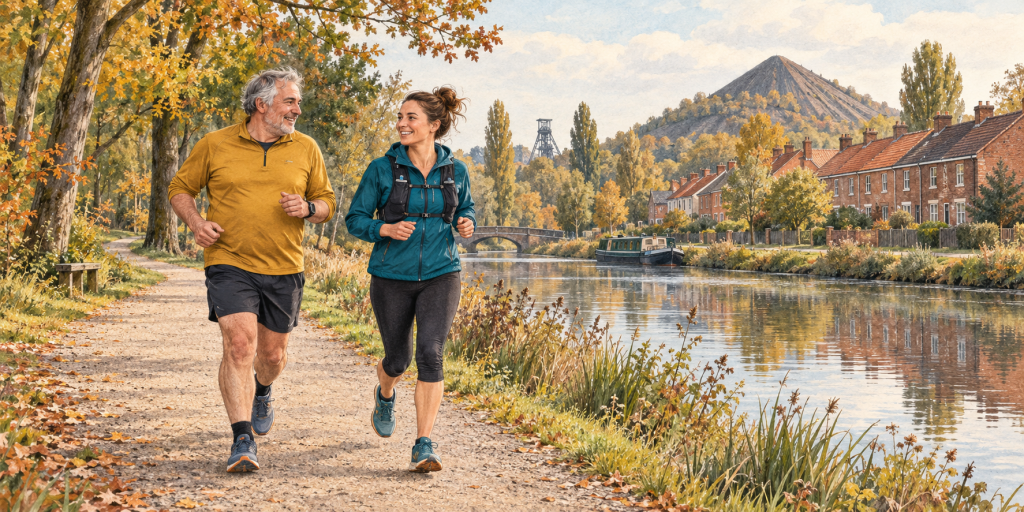
You had planned a run together. A chance to get outside and catch up. But after a few minutes, one of you slows down, then moves ahead again. The other tries to keep up and ends up apologising. What should have been time together starts to feel like a constant negotiation.
Do you need to run at the same pace to enjoy a session together? Not necessarily. You may just need to agree what “together” means that day. Here are three ways to organise a run on a familiar route in the Bassin minier, depending on what you both want.
Make the first decision before starting your watch
Ask a simple question: “Are we going out to chat, do our own training or explore somewhere?” Those three intentions can lead to very different runs.
If one person has a specific workout planned and the other is easing back into running, it helps to know that before setting off. Nobody needs to apologise for wanting to slow down. It is just as useful to say clearly that you want to run faster.
A disagreement is not always about fitness. It may come from two expectations that neither person has put into words.
Choose somewhere that makes the arrangements easier
A route you know, with meeting points that are easy to find, can prevent misunderstandings. On the banks of the Souchez, remember that walkers, cyclists and other runners use the paths too. Stop to regroup somewhere that leaves room for others to pass.
Do not assume the whole area forms a short loop. Check the section you plan to use and its access points before the session. Avoid sudden turns on a busy shared path.
The Parc de la Glissoire in Avion is another local option to consider. Identify your meeting points and check the rules and conditions on the day.
Option 1: a run where you can actually talk
If you came to catch up, agree on a pace at which both of you can hold a conversation. The runner who usually goes faster chooses to adapt to that shared aim.
Try exchanging a few sentences without rushing. If that becomes difficult for either of you, slow down together. This is a personal guide, not a universal speed, and it does not replace your training instructions.
If one person can only manage a few words while the other talks about their week, you are probably having rather different runs. Slow down, walk for a while or shorten the loop. That does not mean the outing has failed.
Option 2: the same place, with a section for each person
Would you both like to keep part of your own session? On a short loop you have checked beforehand, start together, then each do the training you had planned.
Agree on a fixed meeting point and a time to regroup. Choose somewhere both of you know and feel comfortable using independently. This is not about leaving someone alone on an unfamiliar path.
Finish with some time together that suits you both. That might be an easy section or a few minutes of walking while you compare notes. You have shared the outing without having to run the same distance or pace.
Option 3: explore, and leave room to stop
If the aim is to discover an area, allow for pauses. Reading a sign, finding an authorised access point or enjoying a view is part of the outing you chose.
In the Bassin minier, you might want to link a park, a path and a viewpoint. Plan the route using official information rather than improvising a climb up a spoil heap or a shortcut through vegetation.
Set the duration and difficulty around the person least comfortable on that terrain. An exploratory run is not the time to pressure someone into a section they are worried about “just to see”.
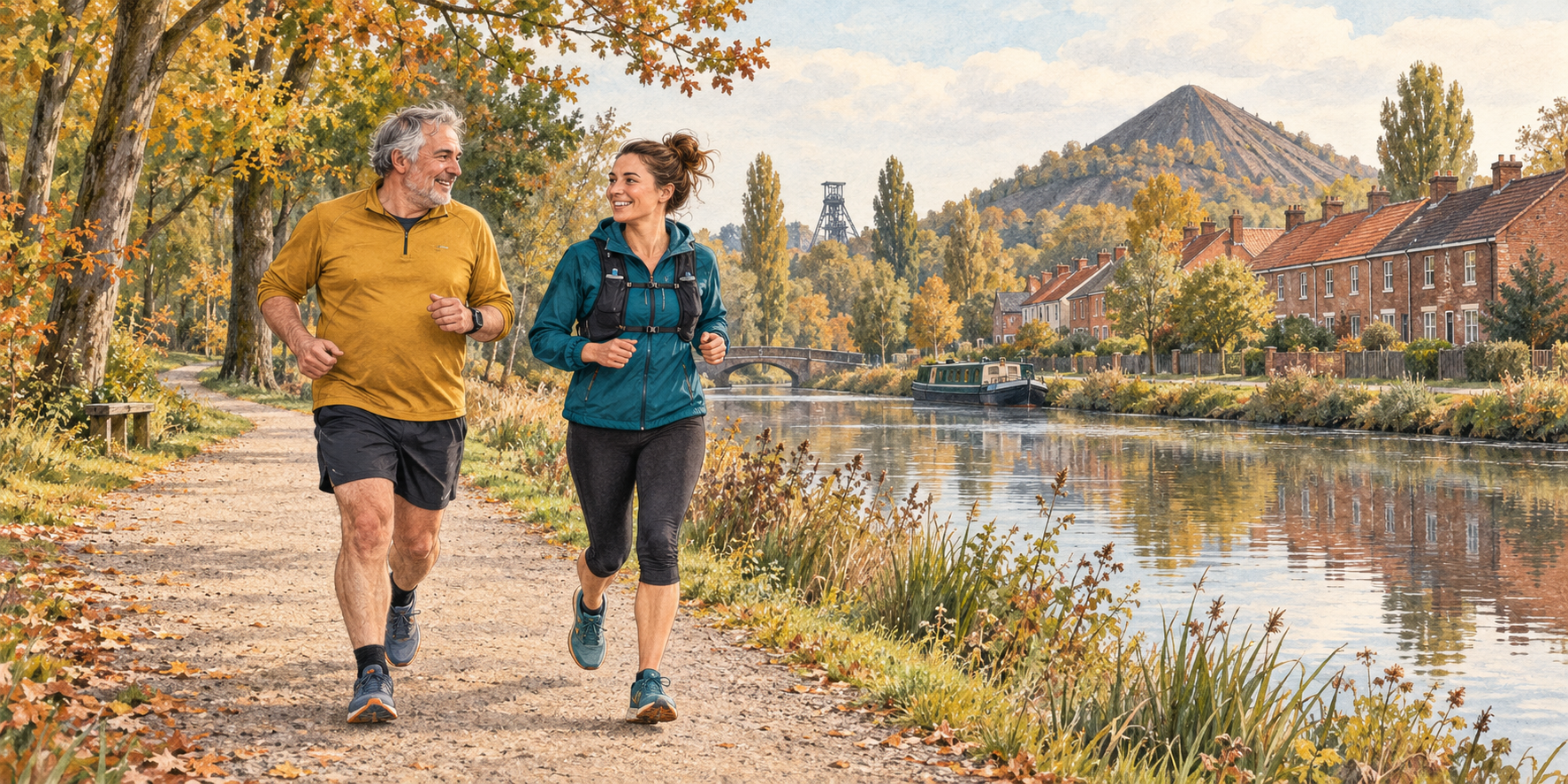
The useful takeaway: three simple agreements
“I’d like us to slow down a little” should be enough. Nobody should have to justify their fitness, form or how their day has gone. Agree that neither person will be left behind without a clear agreement.
After the run, ask the question that matters
Before comparing average paces, ask: “Would we like to do that together again?” If the answer is hesitant, look at what did not work in the arrangements.
Perhaps the route needed to be shorter. Perhaps that day’s training was better done separately. Every outing does not have to become a test of how compatible you are as runners.
Two people, two sets of kit to choose
Running together does not mean wearing the same shoes. Your feet, habits and preferences can differ. The model that suits your partner is not automatically the answer for you.
At TRIPP SPORT in Aix-Noulette, bring your current shoes and tell us about the runs you enjoy sharing. We can take time to compare fit and discuss the surfaces you use, drawing on our qualified running and trail expertise.
Your next outing can start with one question: “What would we like to do together today?” Sometimes that answer matters more than agreeing a pace to the nearest second.
Plan your visit to TRIPP SPORT · Race calendar for Nord and Pas-de-Calais