









































Running cadence, also called step frequency, is the number of strides you take per minute when running. It is an essential indicator for understanding your technique, efficiency and risk of injury.
Cadence affects your stride, your impact on the ground, your stability and even your choice of running shoes. It is one of the easiest parameters to measure – but also one of the most important to optimise.
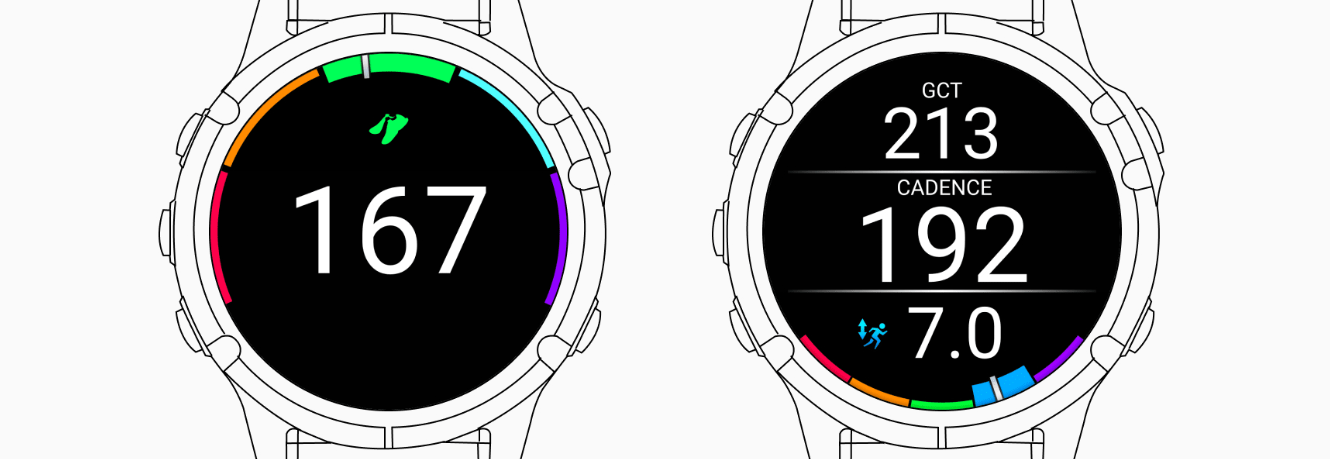
Tip: Set your watch to cadence mode
A cadence of 180 steps per minute is often presented as an ideal running frequency. It corresponds to a short, quick and light stride, which reduces impact on the ground and improves running efficiency. This figure is not an absolute rule, but a biomechanical benchmark observed in the majority of efficient runners.
A practical explanation?
The higher your cadence, the lower the load placed on the ground. Explanation: If you run at 150 steps per minute, your stride will be longer, which means that your impact on the ground with each step will be heavier.
Strength training, running technique (engaged core, bent posture, short steps) and lifting your knees help increase your cadence.

Running cadence is a simple parameter to measure, but it is essential for improving your technique, comfort and safety when running. By optimising it gradually, you can reduce impact, run more smoothly and get more enjoyment from your outings.
Impacts of a 150-spm cadence
A cadence that is too low can lead to knee pain, shin pain, excessive heel impact, instability and muscle fatigue.
Benefits of a 170–180-spm cadence
Increasing cadence helps to reduce shocks, improve posture, stabilise your stride and lower the risk of injury.
VIDEO AVAILABLE:
Credits: Nicolas Bouron - Le coaching du coureur
Source: Youtube
https://youtu.be/K1DJC-YZL1U?si=Bn0XraviSpITQ1If"No technical criterion – drop, stack, cushioning, weight or stability – can on its own determine the right shoe for a runner. "
At Tripp Sport, this information is considered alongside your activity, your sensations and the observations made during the gait analysis.